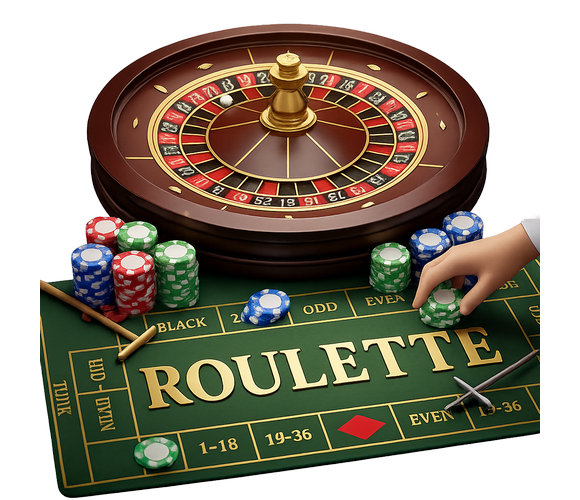
Roulette remains one of the most recognizable and widely played casino games, and on Rummy Gold it is presented in a format that combines traditional mechanics with a modern, highly responsive interface. The game revolves around a simple but powerful concept: predicting where a small ball will land on a spinning wheel. Despite this simplicity, Roulette offers a surprisingly deep and engaging experience that evolves the longer a player interacts with it.
From the moment players Sign up, they are introduced to a visually polished environment that mirrors the atmosphere of a real casino while maintaining the speed and accessibility of an online platform. The layout is designed to be intuitive, allowing users to place bets, track outcomes, and adjust their approach without confusion. This ease of use is one of the main reasons why Roulette continues to attract both beginners and experienced players.
The experience is further enhanced through the mobile App, where the game performs smoothly without lag or delays. This ensures that players can transition seamlessly between desktop and mobile sessions while maintaining the same level of control and clarity. Unlike static formats, Roulette feels alive due to its animation, sound design, and real-time interaction.
In contrast to automated Pokies, Roulette requires active participation. Players are not just observing outcomes; they are constantly making decisions about where and how to place their bets. This creates a stronger sense of involvement, as each round becomes a deliberate action rather than a passive spin.
Another reason for its long-standing popularity is its flexibility. Players are not restricted to a single way of playing. Instead, they can choose from a wide range of betting options, each offering a different balance between risk and reward. This adaptability allows Roulette to suit different types of players, from those seeking steady gameplay to those aiming for high-impact wins.
Understanding the Core Mechanics of Roulette
At its foundation, Roulette consists of three main elements: the wheel, the ball, and the betting table. Each component plays a specific role in determining how the game unfolds and how players interact with it.
Before diving deeper into strategy, it is important to clearly understand how these elements function together in a typical round.
| Element | Function | Effect on Gameplay |
|---|---|---|
| Wheel | Contains numbered slots | Determines final outcome |
| Ball | Spins in opposite direction | Selects winning number |
| Betting Table | Displays numbers and options | Where players place bets |
| Number Layout | Arranged in sequences | Defines betting possibilities |
| Payout System | Predefined odds | Calculates winnings |
Each spin begins with players placing their bets on the table. Once all bets are locked in, the wheel spins and the ball is released. The suspense builds as the ball slows down and eventually lands in one of the numbered slots. That number determines which bets win and which lose.
This simple cycle repeats quickly, allowing for continuous gameplay. The speed of rounds is one of the defining characteristics of Roulette, making it ideal for players who prefer a fast-paced experience.

Types of Bets and Their Impact
One of the most unique aspects of Roulette is the variety of betting options available. These options can be broadly divided into inside bets and outside bets, each offering a different level of risk and reward.
Inside bets focus on specific numbers or small groups of numbers. These bets have lower probabilities but offer higher payouts. For example, betting on a single number can result in a significant return if successful.
Outside bets, on the other hand, cover larger sections of the table. These include options such as red or black, even or odd, and high or low numbers. While the payouts are smaller, the chances of winning are much higher.
This dual structure allows players to tailor their strategy. Some prefer the consistency of outside bets, while others aim for the excitement of high-risk inside bets. Many experienced players combine both approaches to create a balanced system.
Gameplay Flow and Outcome Patterns
Roulette is not just about placing bets—it is about understanding how the game flows over time. While each spin is independent, the sequence of outcomes can influence how players perceive the game.
Some rounds result in quick wins, especially when outside bets are used. These outcomes create a sense of stability and allow players to maintain their bankroll over longer sessions. Other rounds may produce larger wins when inside bets succeed, creating moments of high excitement.
To better understand how different outcomes typically appear, the following chart provides a visual breakdown of result distribution.
This distribution shows that lower-risk bets occur more frequently, while high-value wins are less common but more impactful. This balance is what creates the unique rhythm of Roulette.
Why Roulette Continues to Dominate Casino Gaming
Roulette has maintained its popularity for decades because it offers a perfect combination of simplicity and depth. Players can start without prior experience, yet still discover more advanced strategies as they continue playing.
The experience on Rummy Gold further enhances this appeal. Players can quickly Login, access the game, and begin playing without delays, ensuring a smooth and uninterrupted session every time.
Promotional features such as a well-timed Bonus provide additional opportunities to explore different betting strategies without immediate pressure. This allows players to experiment and refine their approach over time.
Additionally, the platform offers various Links that lead to alternative versions of Roulette and other related Games, giving players the flexibility to expand their experience beyond a single format.
Roulette remains a cornerstone of online gaming because it adapts to the player. Whether someone is looking for quick entertainment or a more structured session, the game provides the tools and flexibility needed to create a personalized experience.
Betting Systems, Probability Logic & Advanced Strategy
As players continue exploring Roulette on Rummy Gold, the experience gradually shifts from basic interaction to a more calculated and structured approach. While the rules remain simple, the depth of the game becomes more apparent when players start analyzing probability, understanding payout structures, and refining their betting patterns over time.
One of the most important concepts to grasp is that every bet in Roulette is tied to a fixed mathematical probability. Unlike skill-based card games, the outcome of each spin is completely independent. However, how players distribute their bets across the table can influence session length, volatility, and overall experience. This is where strategy becomes relevant—not in predicting results, but in managing how one interacts with them.
Another key element is expectation management. Many players initially assume that patterns or streaks can be used to predict future outcomes. In reality, each spin resets the probabilities. Recognizing this allows players to avoid common misconceptions and instead focus on building consistent, sustainable strategies.
Full Comparison of Bet Types and Their Impact
To develop a deeper understanding of Roulette, it is essential to examine how different bet types function in terms of coverage, probability, and payout. Each category offers a unique balance between risk and reward.
Before applying any strategy, the table below provides a detailed breakdown of the most common bet types and their characteristics.
| Bet Type | Numbers Covered | Probability | Payout |
|---|---|---|---|
| Straight Up | 1 | Very Low | 35:1 |
| Split | 2 | Low | 17:1 |
| Street | 3 | Low | 11:1 |
| Corner | 4 | Moderate | 8:1 |
| Dozen | 12 | Medium | 2:1 |
| Red/Black | 18 | High | 1:1 |
This table clearly demonstrates the trade-off between probability and payout. The more numbers a bet covers, the higher the chance of winning—but the lower the payout.
Strategic Approaches Based on Risk Profiles
Roulette strategies often revolve around how players distribute risk. While there is no guaranteed way to win, different approaches can shape the overall experience.
Low-risk strategies typically focus on outside bets such as red/black or even/odd. These bets provide consistent outcomes and allow players to extend their sessions. This approach is ideal for those who prioritize stability over high returns.
Balanced strategies involve combining outside bets with selective inside bets. For example, a player might place a base bet on red while also covering a few individual numbers. This creates a hybrid system that offers both frequent wins and occasional larger payouts.
High-risk strategies focus almost entirely on inside bets. Players using this approach aim for significant payouts by targeting specific numbers or small groups. While this can lead to impressive wins, it also introduces higher volatility and shorter sessions.
Player Strategy Comparison
To better understand how these approaches perform in practice, consider the following comparison of different strategic styles.
| Strategy Type | Main Focus | Session Length | Volatility |
|---|---|---|---|
| Conservative | Outside bets | Long | Low |
| Balanced | Mixed betting | Medium | Moderate |
| Aggressive | Inside bets | Short | High |
This comparison highlights how different strategies impact gameplay duration and risk exposure.
Distribution of Wins by Strategy Type
To visualize how different betting approaches contribute to overall results, the chart below shows the distribution of wins across strategy types.
This breakdown reinforces the idea that lower-risk bets produce more frequent results, while high-risk strategies contribute less often but with greater impact.
Advanced Thinking and Practical Optimization
As players refine their approach, they begin to focus on consistency rather than prediction. One effective technique is maintaining a fixed betting structure, avoiding sudden increases after losses. This helps preserve the bankroll and reduces emotional decision-making.
Another method involves layering bets. By placing multiple smaller bets across different areas of the table, players can create a more balanced exposure. This reduces the risk of losing an entire round while still allowing for potential gains.
It is also important to recognize when to stop. Ending a session after reaching a predefined limit—whether positive or negative—is a key part of disciplined play. This prevents extended sessions from turning unfavorable.
Using a Bonus can also enhance gameplay by providing additional opportunities to test strategies without immediately affecting the main balance. Combined with exploring platform Links, players can discover variations of Roulette that offer different pacing and dynamics.
Roulette rewards players who understand its structure and approach it with patience. While the wheel determines the outcome, the player determines how the game is experienced over time.
Professional-Level Play, Session Mastery & Frequently Asked Questions
As players reach a more advanced stage in Roulette on Rummy Gold, the game transforms into a system of controlled decision-making rather than simple betting. At this level, players are no longer experimenting randomly—they are refining habits, optimizing sessions, and understanding how every action contributes to long-term performance.
A key realization at this stage is that Roulette is not about “beating the wheel,” but about managing interaction with it. Since outcomes remain random, the only controllable elements are bet size, bet distribution, timing, and session structure. Players who master these elements tend to experience more stable gameplay and fewer extreme fluctuations.
Another important factor is consistency. Advanced players rarely make sudden changes. Instead, they rely on structured approaches that allow them to maintain control regardless of short-term outcomes. This discipline is what separates experienced players from those who rely purely on intuition.
Behavioral Patterns and Decision Stability
The way a player behaves during a session often determines the outcome more than the bets themselves. Even with identical strategies, two players can experience very different results depending on how consistently they apply their approach.
Some players maintain a strict structure from the beginning. They define their bet size, choose a specific strategy, and follow it without deviation. This approach reduces emotional interference and creates a predictable gameplay pattern.
Others adopt a reactive style, adjusting their bets after every spin. While this can sometimes produce short-term gains, it often leads to instability and inconsistent results over longer sessions.
There is also a controlled adaptive approach, where players make gradual adjustments based on session progress rather than individual spins. This method combines flexibility with discipline, making it one of the most effective ways to manage gameplay.
Player Behavior Comparison
To better understand how different approaches influence outcomes, consider the following comparison of behavioral patterns.
| Behavior Type | Decision Style | Long-Term Effect |
|---|---|---|
| Structured | Predefined rules | Stable performance |
| Reactive | Emotion-based adjustments | High inconsistency |
| Adaptive | Gradual changes | Balanced outcomes |
| Aggressive | Rapid bet increases | High volatility |
Players who maintain structured or adaptive approaches generally achieve more consistent results, while reactive and aggressive styles often lead to unpredictable sessions.
Advanced Bankroll Structuring
At a professional level, bankroll management becomes more precise. Instead of using a single pool of funds, players divide their bankroll into multiple layers.
One common method is session segmentation. Players allocate a specific amount for each session and stop once that limit is reached. This prevents overextension and ensures that losses remain controlled.
Another approach is progressive allocation. Instead of increasing bets randomly, players adjust them based on overall session performance. For example, they may slightly increase bets after reaching a profit threshold while reducing them during downturns.
Timing also plays a role. Ending a session at the right moment can be just as important as placing the right bets. Many advanced players prefer shorter, focused sessions rather than extended gameplay, as this helps maintain concentration and reduces fatigue.
Efficiency vs Risk Balance
Understanding how efficiency relates to risk is essential for optimizing gameplay. Players must constantly evaluate whether their strategy allows them to stay in the game long enough to benefit from favorable outcomes.
The chart clearly shows that a balanced strategy offers the highest efficiency. It allows players to remain active while still capturing occasional higher-value wins.
Advanced Gameplay Insights
At this stage, players begin to refine subtle aspects of their gameplay. For example, they may adjust the timing of their bets, vary their patterns slightly to avoid predictability, or use a combination of bet types to create a more stable system.
Observation also becomes more important. While Roulette outcomes are random, tracking results can help players maintain awareness of their own strategy rather than influencing the game itself. This distinction is crucial for maintaining a rational approach.
The platform experience further supports advanced play. On Rummy Gold, players can explore additional Links to access different Roulette variations or related Games, allowing them to diversify their experience.
Mobile access through the App ensures that players can manage their sessions efficiently, regardless of where they are. This flexibility is especially valuable for maintaining structured gameplay routines.
Frequently Asked Questions
Roulette is a casino game where players bet on numbers or groups while a ball spins on a wheel to determine the outcome.
No strategy can guarantee results, but structured betting improves consistency and session control.
A balanced approach combining inside and outside bets is generally the most sustainable.
Yes, the rules are simple, making it accessible for all players.
Set limits, divide sessions, and avoid increasing bets impulsively.






Comments